

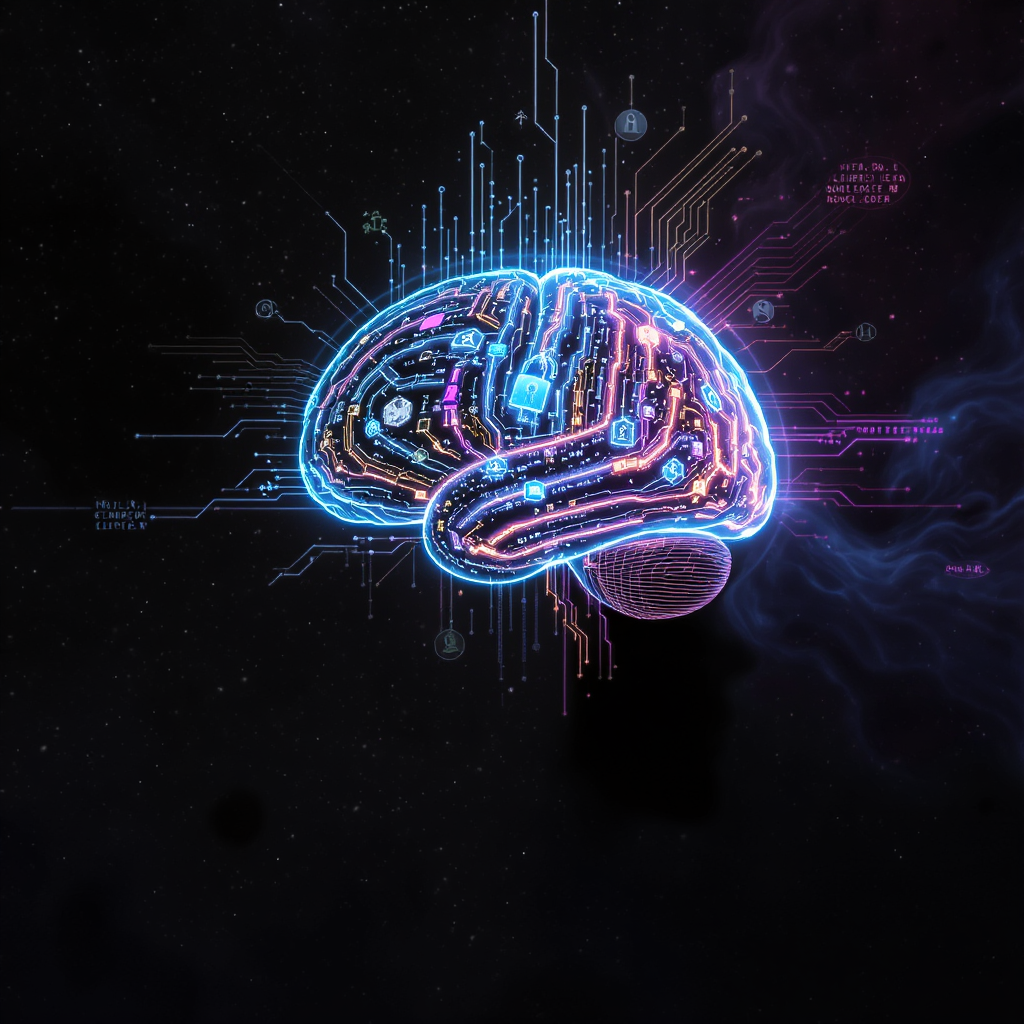
Picture this: You’re sitting in a coffee shop, mindlessly scrolling through your phone. An ad appears for those exact headphones you were just thinking about buying. Coincidence? Maybe. But what happens when “maybe” becomes “definitely”—when companies don’t just predict what you want, but actually read what you’re thinking
Welcome to 2024, where the science fiction of yesterday is knocking—loudly—on the door of today’s reality.
Your Brain: The Final Privacy Frontier
We’ve surrendered our digital footprints. Every click, scroll, like, and lingering gaze feeds algorithms that know us better than we know ourselves. But here’s the uncomfortable question keeping ethicists, neuroscientists, and privacy advocates awake at night:
What happens when technology doesn’t just track our behavior—but reads our minds?
This isn’t some Black Mirror fantasy anymore. Brain-computer interfaces (BCIs) are advancing at breakneck speed, and the implications are simultaneously thrilling and terrifying.
Neuralink and the Mind-Reading Revolution
When Elon Musk announced that Neuralink would begin human trials within six months, the internet predictably exploded. Social media lit up with reactions ranging from excitement to existential dread:
“Our brains just got an upgrade—or a hack?” one viral post questioned.
Neuralink promises revolutionary benefits: helping paralyzed individuals walk again, restoring sight to the blind, treating neurological disorders that have plagued humanity for centuries. The potential is genuinely life-changing.
But flip that coin over.
The same technology that could cure Alzheimer’s could also decode your private thoughts. The interface that helps you control devices with your mind could also make your mind controllable by devices—or worse, by the people who own those devices.
The New York Times recently highlighted this paradox in stark terms: as BCIs edge closer to mainstream reality, we’re entering uncharted ethical territory where the line between healing and hacking becomes dangerously blurred.
The Data Goldmine Inside Your Skull
Think about what companies already do with your behavioral data. Now imagine what they could do with direct access to your neural patterns:
Advertisers wouldn’t need to guess what catches your attention—they’d know which neural pathways light up when you see a product. They could craft messages that bypass your rational mind entirely, speaking directly to your subconscious desires.
Employers might screen job candidates not just through interviews, but through neural scans that reveal stress responses, creativity patterns, or “cultural fit” at a biological level.
Governments could potentially identify dissent before it’s spoken, detecting thought patterns associated with rebellion, protest, or non-conformity.
Insurance companies might adjust your premiums based on neural markers for risk-taking behavior or health predictions your brain reveals before symptoms appear.
Suddenly, that guilty-pleasure playlist seems like the least of our worries.
The Global Scramble for Neural Privacy
The world is waking up to this threat, though perhaps not fast enough.
India recently rolled out aggressive privacy protections under its DPDP rules, including anti-scam AI from Google designed to protect digital data. It’s a step in the right direction, but experts argue we’re building medieval walls around castles while adversaries are developing teleportation technology.
Simon Lee from Flitto describes what we’re witnessing as a “global shift in technology, data, and human interaction”—one where language AI, neural interfaces, and big data converge to create capabilities we’re philosophically unprepared to handle.
The question isn’t just about protecting data anymore. It’s about protecting thought itself.
The Ethical Minefield: Questions We Must Ask Now
As this technology races forward, we’re confronted with questions that would make philosophy professors weak at the knees:
🧠 Who owns your thoughts?
If a device reads and records your neural activity, who has rights to that data? You? The device manufacturer? The app developer? Your employer if they provided the technology?
🧠 Can thoughts be used against you?
Should neural data be admissible in court? Could fleeting angry thoughts be used as evidence of intent? Where’s the line between thought and action?
🧠 What about cognitive liberty?
Do we have a fundamental right to mental privacy—to keep our thoughts entirely our own? Should this be enshrined as a human right before the technology makes it impossible to enforce?
🧠 Will inequality reach our neurons?
Are we creating a two-tiered society of the “mind-rich” and “mind-poor”—where those who can afford cognitive enhancements leave everyone else behind?
🧠 Could this technology actually bring us closer?
Here’s the optimistic spin: What if neural technology could foster unprecedented empathy? Imagine truly understanding another person’s experience, not intellectually but viscerally. Could BCIs create connection on a scale humanity has never known?
The Race Between Innovation and Regulation
History shows us that technology typically outpaces the laws designed to govern it. We invented social media, then spent decades trying to understand its psychological impact. We created smartphones before understanding their addictive potential. We built the internet before considering cybersecurity.
We cannot make the same mistake with our minds.
Privacy advocates are sounding the alarm, but their voices risk being drowned out by the siren song of innovation and profit. The companies developing BCIs have every incentive to move fast and break things—except this time, the “things” being broken might be the sanctity of human consciousness.
Some proposed solutions include:
- Neural data protection laws specifically classifying brain data as a special category requiring extraordinary protection
- Mandatory consent protocols that make it impossible to harvest neural data without explicit, informed agreement
- Right to cognitive liberty enshrined in constitutional frameworks globally
- Independent oversight boards with authority over BCI research and deployment
- Transparency requirements forcing companies to disclose exactly what neural data they collect and how it’s used
But will these safeguards arrive in time? Or will we wake up one day to discover our inner lives have already been commodified, sold, and exploited?
Your Mind, Your Choice—For Now
Here’s the uncomfortable truth: this technology is coming whether we’re ready or not. The medical benefits are too profound, the commercial opportunities too lucrative, the military applications too strategic.
The question is whether we’ll shape this future deliberately or stumble into it blindly.
So let me ask you directly:
- Would you use a brain implant if it could cure a disease you had?
- Would you let your employer provide neural enhancement technology?
- Where would you draw your personal line—which thoughts and memories are absolutely off-limits to technology?
- Are you more excited or terrified by this prospect?
The conversation happening right now—in research labs, legislative chambers, online forums, and coffee shops—will determine whether our minds remain our own or become the next frontier for surveillance capitalism.
The Bottom Line
We stand at an inflection point in human history. For the first time, we have the technological capability to breach the final fortress of privacy: the human mind itself.
This isn’t about being anti-technology. BCIs could genuinely transform medicine, unlock human potential, and solve problems we’ve struggled with for millennia.
But as one viral post perfectly captured: “The final frontier for privacy is within our own brains.”
And unlike our social media accounts, browsing history, or location data—we can’t just create a new brain account if this one gets compromised.
The choices we make now about neural privacy will echo through generations. Our grandchildren will either thank us for protecting the sanctity of human thought or wonder how we let it slip away so easily.
Your brain. Your thoughts. Your last private space.
Let’s make sure it stays that way.