

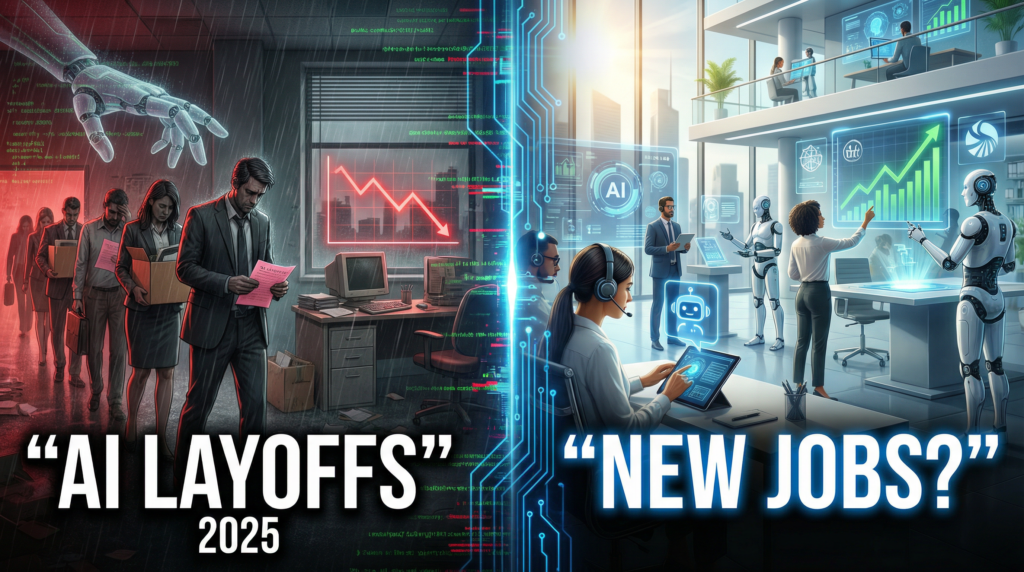
In 2025, the U.S. job market faced a significant upheaval as over 54,000 layoffs were directly linked to artificial intelligence (AI). This remarkable figure comes from data collected by Challenger, Gray & Christmas, an outplacement firm that carefully tracks job cuts. This year, AI became a major reason for job losses, second only to broader cost-cutting measures and restructuring efforts. As we explore this trend, it’s crucial to understand the implications for workers, companies, and the economy as a whole.
A Major Shift in the Job Market
The Numbers Tell the Story
To put things into perspective, the total number of layoffs in the U.S. for 2025 reached over 1.17 million, the highest since the COVID-19 pandemic peak, when layoffs hit 2.2 million. Within the tech sector, approximately 126,000 to 141,000 jobs were cut, and AI is increasingly being recognized as a notable factor in these cuts.
The phenomena accelerated in late 2025, especially in October, when about 31,000 layoffs were attributed to AI. This momentum marks a clear shift; in 2024, AI was involved in significantly fewer layoffs, around 12,700. Companies have grown more willing to embrace AI as a means to streamline their operations, automate repetitive tasks like customer support and data entry, and reduce layers of management to foster quicker innovation.
Major Companies Leading the Charge
Amazon: Pregnant with Change
Amazon was one of the big names announcing job cuts, with around 14,000 portrayed as a needed “leaner structure.” SVP Beth Galetti highlighted generative AI’s potential as “the most transformative technology since the internet.” However, CEO Andy Jassy clarified that the decision wasn’t solely about AI or finances but aimed at improving overall company culture and execution.
Microsoft: A Workforce in Flux
Microsoft took similar steps, making multiple rounds of layoffs that total around 15,000 positions removed throughout the year. Focused on areas like gaming, cloud, and sales, these decisions are closely tied to the company’s substantial investments in AI, which include $80 billion earmarked for improving operations and infrastructure.
Salesforce: Automation Changes the Game
Salesforce cut about 4,000 customer support roles in September, with CEO Marc Benioff citing that AI now handles up to 50% of the workload. This shift in responsibilities means fewer employees are required to maintain the same level of service.
Other Tech Giants and Their Cuts
IBM hinted at further layoffs in Q4, while leaders at CrowdStrike and Workday acknowledged cuts due to AI initiatives. Even non-tech companies like UPS have automated logistics processes, resulting in job reductions.
The Debate: Is It Necessity or Convenience?
Pro-AI View: Faster Innovation Ahead
While many argue that these layoffs are beneficial in the long run, promoting faster innovation and competitiveness, this view raises questions. Companies are not simply reducing headcount; they are also actively hiring in AI-related fields, which includes positions in data science and engineering.
Skepticism: The Other Side of the Coin
However, experts like Fabian Stephany from Oxford warn that some firms might use AI as a convenient excuse to correct overhiring that occurred during the pandemic. An MIT study suggests AI could potentially take over 11.7% of U.S. jobs, saving companies trillions in wages. Yet, the actual productivity improvements from AI are still being assessed and may take time to manifest.
Looking Forward
In terms of future employment, predictions vary. Forrester insights suggest that half of the layoffs linked to AI might eventually lead to rehiring—potentially in lower-cost offshore roles. Furthermore, the World Economic Forum reports that 41% of companies expect to reduce their workforce driven by AI in the next five years, although new job opportunities may arise in sectors like AI and fintech.
The Dual Edge of AI Technology
As we wrap up 2025, the conversation around AI continues to underscore its dual nature. While it boosts efficiency, it also disrupts traditional job roles, particularly affecting entry-level and mid-management positions. The tech industry is evolving rapidly, and as the new year begins, many are left to ponder: Will there be enough new opportunities to offset the losses caused by AI?
In summary, as companies navigate this pivotal moment, the future of work will likely be defined not just by job losses but also by the creation of new roles. This dual-edged sword serves as a reminder that while technological advancements can yield remarkable benefits, they also come with challenges that need to be addressed responsibly.
The login process is seamless and I love how quickly I can get into the action. Best slot experience I have had in a while. Just visit slotaladinlogin and see for yourself.