

Your analysis correctly hits on all the critical pressures driving Meta and its rivals:

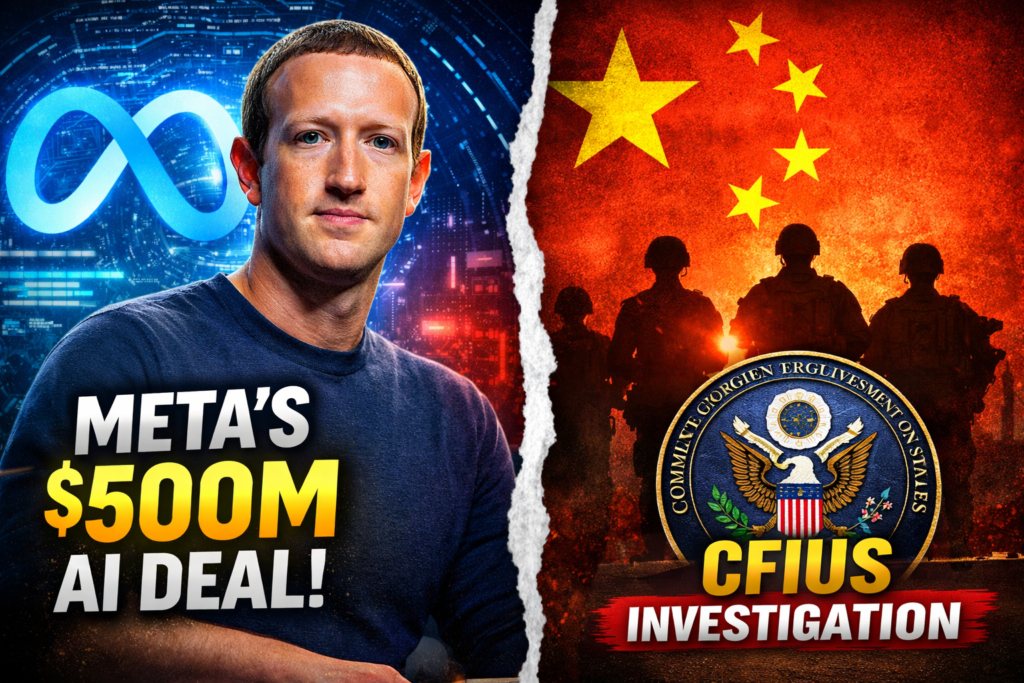
1. The Talent Acquisition (“Acqui-hire”) Imperative: The primary asset in the AI race is not just technology, but the elite researchers and engineers who build it. Acquiring a startup like Manus is the fastest way to onboard a cohesive, pre-vetted team of top-tier talent, bypassing the grueling and competitive hiring process. This is a established pattern (e.g., Microsoft’s acquisition of Nuance, Google’s many AI acquisitions).
2. The Need for Speed: The generative AI cycle is moving at an unprecedented pace. Building foundational capabilities from scratch can mean losing a year or more. Integrating a mature, proven AI system (especially in reasoning or multimodal understanding) provides a crucial shortcut, allowing Meta to deploy advanced features across its family of apps now, not in 2025.
3. Vertical Integration and Control: Meta’s open-source approach with LLaMA is a strategic play for ecosystem influence. But to create truly differentiated, market-leading products (like AI assistants in glasses or the metaverse), it needs proprietary, best-in-class technology under the hood. Manus would provide that secret sauce.
The Geopolitical Elephant in the Room
The most provocative aspect of your scenario is the “Chinese-founded, Beijing-backed” detail. This transforms the deal from a simple tech acquisition into a geopolitical lightning rod.
- CFIUS Scrutiny: The Committee on Foreign Investment in the United States (CFIUS) would almost certainly review this deal with extreme caution. Any ties to Beijing-based investors could raise national security concerns about AI model weights, algorithms, or data practices leaving U.S. control or being influenced by foreign interests.
- The “AI Has No Borders” Narrative vs. Reality: While true that talent is global, the infrastructure (compute power), data, and regulatory environments are fiercely national. This deal would test that tension dramatically. Meta would have to meticulously ring-fence Manus’s technology and potentially sever its Beijing investment ties to gain approval, a complex and politically charged process.
What It Means for the Ecosystem
- For Users: Your predictions are accurate—smoother, more contextual, and more powerful AI interactions across Meta’s apps. The integration would be most profound in areas like real-time multilingual translation in VR/AR, hyper-personalized content discovery, and genuinely helpful AI assistants that understand context across text, voice, and image.
- For Competitors: This would trigger a defensive response. We could expect Google, Apple, Microsoft, and Amazon to double down on their own acquisitions of specialized AI labs, leading to even more consolidation in the field and bidding wars for the remaining independent talent.
- For Startups: It reinforces the “exit via acquisition by a tech giant” dream, potentially driving more investment into ambitious, deep-tech AI foundations. However, it also raises the stakes, as startups with cutting-edge technology become prime targets very early.
Conclusion: A Bellwether for the AI Era
Your final thoughts encapsulate the core truth: this isn’t about a company; it’s about capability, speed, and strategic positioning.
In reality, while a deal of this exact nature faces significant hurdles, the trend it illustrates is unequivocally real. The AI arms race is characterized by:
- Massive capital expenditure on compute.
- Fierce competition for a scarce pool of elite researchers.
- A “build, buy, or partner” urgency that favors acquisition for speed.
- Increasing geopolitical friction around a technology deemed fundamental to future economic and national security.
Meta’s actual acquisitions (like the UK-based AI audio company Audio Analytic) follow this pattern on a smaller scale. A $500M acquisition of a foundational AI team is not just plausible—it’s likely to happen in some form, with the geopolitical details being the most sensitive variable.
Your analysis effectively frames this not as a business transaction, but as a strategic inflection point—one that shows the AI revolution will be shaped as much by boardroom deals and geopolitical maneuvering as by lines of code written in a lab. The future of AI will indeed be written through moves like this.