


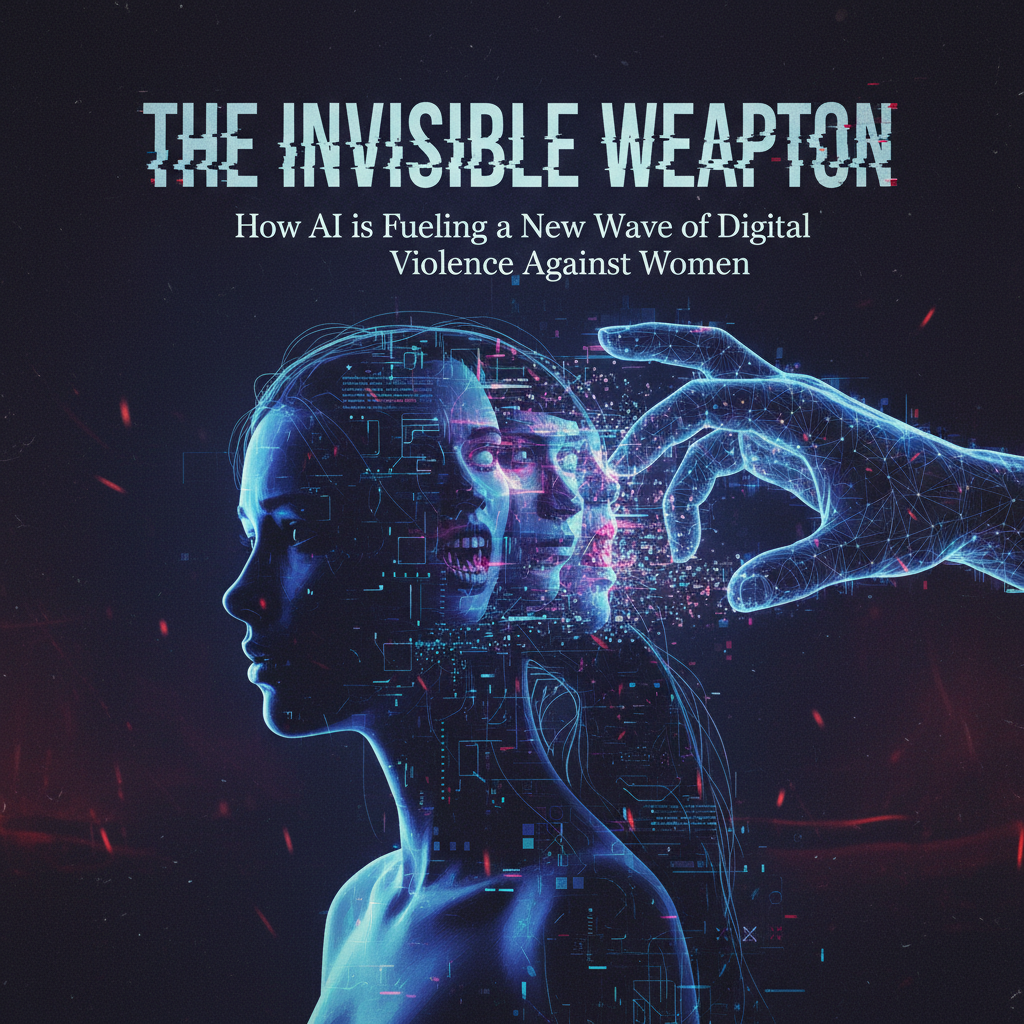
We often talk about AI as a tool—a neutral force that can either empower or endanger us, depending on who holds it. But what happens when the technology itself becomes a weapon, meticulously designed and unleashed with terrifying precision against one half of the population?
A groundbreaking UN Women report has just pulled back the curtain on a silent, escalating crisis, and the findings are a gut punch to the notion of a safe digital future. The data reveals a chilling new reality where artificial intelligence isn’t just a bystander; it’s an active participant in the systemic abuse of women and girls.
The Chilling Numbers: A Landscape of Digital Fear
Let’s move beyond the abstract and look at the human cost. The statistics are not just numbers; they are a testament to a pervasive, global problem:
- A Staggering 95% of all non-consensual deepfake porn—hyper-realistic videos and images created without consent—targets women.
- 38% of Women Worldwide have personally experienced online abuse and harassment.
- A mere 40% of countries have laws specifically designed to combat cyber harassment, leaving a vast majority of women without legal recourse.
This isn’t random trolling or isolated hate speech. This is a targeted, technologically supercharged campaign of degradation and intimidation. It’s a digital form of violence that shatters reputations, inflicts deep psychological trauma, and silences voices in the public square.
The Perfect Storm: Anonymity Meets Unchecked AI
Why is this happening now? The report points to a dangerous synergy. The veil of online anonymity, combined with the frighteningly easy access to powerful generative AI tools, has created a perfect storm.
Anyone with a grudge and an internet connection can now weaponize AI to create convincing, humiliating content. The barriers to committing what was once a highly technical form of abuse have crumbled. This raises a deeply unsettling question: In our rush to innovate, have we built a new arsenal for abusers without first building the defenses to protect their victims?
A Global Wake-Up Call: From Outrage to Action
The response on platforms like X, flooded with #TechEthics threads, and in reports from Reuters and ET Tech, is one of unified outrage. This is no longer a niche issue—it’s a fundamental test of our collective digital ethics.
The calls to action are now crystal clear:
- For Governments: The urgent need for robust, modern legislation that treats digital violence as seriously as physical violence. The current legal landscape is a patchwork of inadequacy.
- For Tech Companies: A direct mandate to step up. This means hiring more women and marginalized genders in design and policy roles, building safer AI models with ethical guardrails from the ground up, and creating faster, more humane processes for removing harmful content.
- For All of Us: A need to recognize this as a critical part of the broader conversations we’re having about AI governance and disinformation security.
The Bigger Picture: An “Ethical Antipattern” We Can No Longer Ignore
This crisis is a stark example of what tech thought leaders at firms like Thoughtworks call an “ethical antipattern” in Generative AI—a predictable, recurring flaw in how a technology is developed and deployed that leads to harmful outcomes.
By treating ethics as an afterthought, we have allowed a fundamental design flaw to proliferate: the capacity for AI to be easily weaponized for gender-based violence. Fixing this requires more than just content moderation; it requires a philosophical shift in how we build these world-changing tools.
The conversation has moved from theoretical risks to lived realities. The question is no longer if we will regulate and redesign AI for safety, but how quickly we can do it before more lives are shattered.