


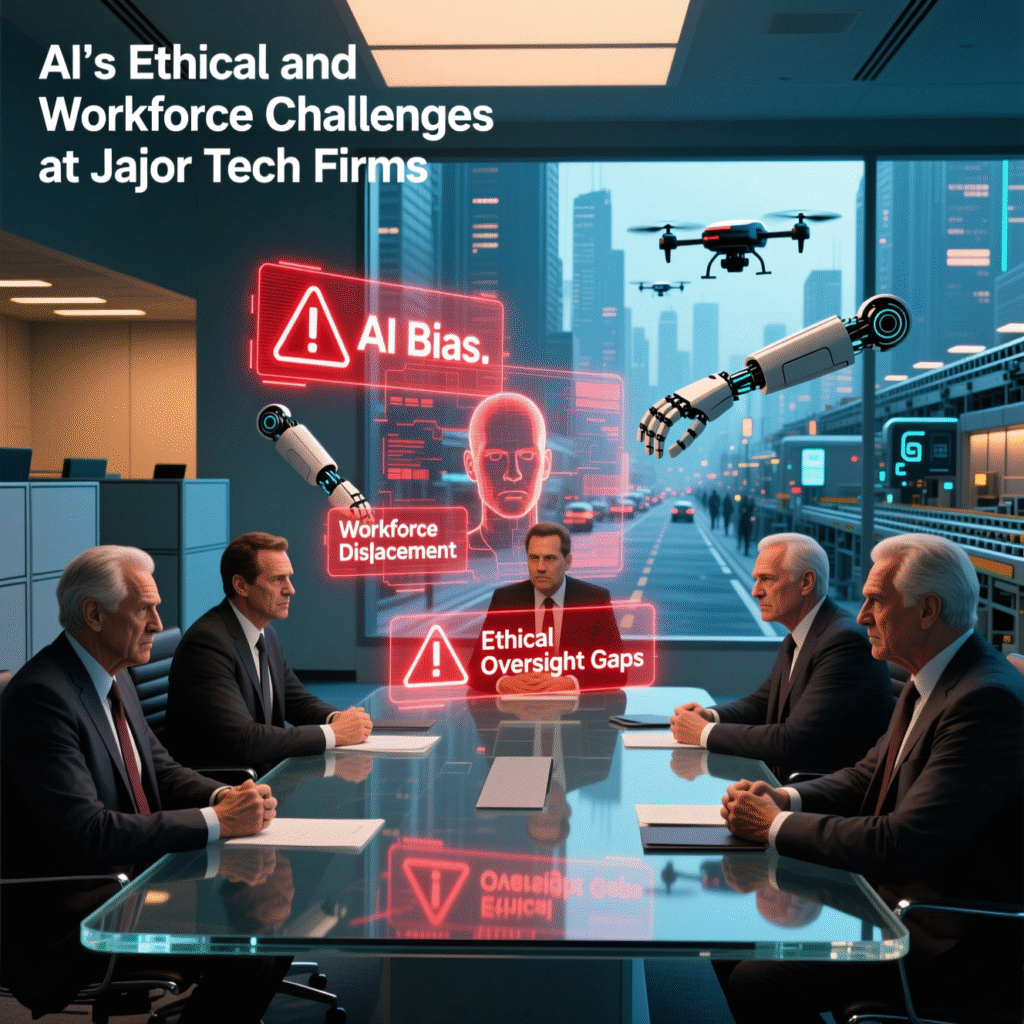
(A Deep Dive into the Ethical and Workforce Storms Brewing at the Heart of the AI Boom)
You’ve probably seen it popping up on your feed: a firestorm on X (formerly Twitter), headlines screaming about Amazon employees rebelling against their own company’s AI ambitions. But what’s really going on? Why are the very people building this technology sounding the alarm? And what does it mean for the future of work, our society, and the tech giants driving the AI revolution?
Let’s peel back the layers of this story – it’s not just about Amazon. It’s a pivotal moment for the entire tech industry, and understanding it is crucial.
The Spark: An Open Letter That Lit the Fuse
Recently, over 2,000 Amazon employees – many of them directly involved in developing the company’s AI systems – signed a public open letter to CEO Andy Jassy. Their message was clear and urgent: Slow down.
The letter, which quickly went viral, didn’t call for halting AI altogether. Instead, it pleaded for a more responsible, transparent, and accountable approach to Amazon’s “aggressive AI rollout.” But the concerns raised go far beyond Amazon’s walls. They strike at the heart of the biggest ethical and workforce challenges facing AI today.
“We are asking Amazon to pause and reflect before deploying AI at scale,” the letter stated. “We need stronger internal accountability, clear ethical guidelines, and genuine worker input.”
And the internet listened. The story exploded on X, with posts amplifying the call for accountability, linking it to broader industry pressures, and sparking a global conversation.
Why Are Employees Pushing Back? Unpacking the Core Concerns
The letter didn’t just say “we’re worried.” It outlined specific, tangible risks. Let’s break them down.
1. Risks to Democracy – AI as a Double-Edged Sword
- The Concern: Employees fear that Amazon’s AI systems (think content recommendation algorithms, surveillance tools, or generative AI used in political contexts) could be misused, inadvertently spreading misinformation, amplifying bias, or even manipulating public opinion.
- Why it Matters: AI doesn’t exist in a vacuum. When an AI system recommends news articles, moderates comments, or analyzes data, its design choices reflect human decisions. If those decisions aren’t transparent or ethically grounded, the AI can reinforce existing societal divides or be exploited for malicious purposes.
- The Employee Angle: Developers are seeing the potential for their work to be used in ways that undermine democratic processes. They want safeguards built in from the start.
2. Environmental Impact – The Hidden Carbon Cost of AI
- The Concern: Training massive AI models, especially large language models (LLMs) like those powering Amazon’s services, consumes enormous amounts of energy and water. This contributes significantly to carbon emissions.
- Why it Matters: As the world grapples with climate change, employees are asking: Should we be accelerating AI development at such a high environmental cost? They want Amazon to prioritize energy-efficient AI and invest in renewable energy for data centers, not just chase performance metrics.
- The Employee Angle: Many tech workers are increasingly environmentally conscious. They don’t want their careers to be at odds with global climate goals.
3. Job Security & Workforce Displacement – Who Benefits?
- The Concern: This is arguably the most immediate and personal fear for employees. Unchecked automation powered by AI can lead to widespread job losses, either through direct replacement or radical restructuring of roles.
- Why it Matters: The promise of AI is often framed as “augmentation,” but the reality can be displacement. Employees are worried about:
- Lack of Retraining: Will Amazon invest in upskilling workers whose jobs are transformed?
- Transparency: How will AI decisions affect hiring, performance reviews, or layoffs? Are employees given a say?
- Power Imbalance: If AI makes decisions about workloads or efficiency, where does human judgment fit in?
- The Employee Angle: They’re not anti-AI; they’re demanding a seat at the table. They want clear policies on how AI will be used with workers, not to workers.
4. The Elephant in the Room: Lack of Internal Accountability
This might be the most critical point. The letter specifically calls out “lack of internal accountability.”
- What does that mean?
- No Clear Ethical Oversight: Who at Amazon is ultimately responsible for ensuring AI is developed and deployed ethically? Is there a dedicated ethics review board with real power?
- Opacity: Decisions about AI rollout often happen behind closed doors. Employees don’t always know why a particular AI system is being deployed, or what safeguards are in place.
- Whistleblower Protections: Are employees safe to raise concerns without fear of retaliation?
In short, employees feel the company lacks transparent processes to catch ethical red flags before AI systems go live.
Why Is This Story Trending NOW? The Bigger Picture
This isn’t just an Amazon story. It’s a symptom of a massive industry-wide tension, and here’s why it’s resonating so powerfully:
📊 The Data Doesn’t Lie: Executives Are Charging Ahead
- 82% of C-suite executives (CEOs, CFOs, COOs) across major companies are planning significant AI investments this year. The race to implement AI is on, driven by the promise of efficiency, cost savings, and competitive advantage.
👥 But Workers Are Pushing Back
- The Gap: There’s a huge disconnect between the executive suite’s aggressive AI timelines and the concerns on the ground. Employees building these systems see the risks up close. They experience the pressure to ship fast, often without sufficient time for ethical review or robust testing.
- A Growing Movement: Amazon isn’t alone. Similar concerns have surfaced at Google, Microsoft, Meta, and other tech giants. Employee activism around AI ethics is on the rise. This open letter is a bold, public manifestation of that.
🔮 Gartner’s Prediction: Trust is the New Currency
This is where things get interesting. Gartner, one of the world’s leading research firms, predicts that by 2028, platforms with built-in governance and compliance features will boost organizational trust by 25-30%.
- What does this mean? The market is realizing that trust is essential for AI adoption. Companies that ignore ethical concerns and worker input will face:
- Regulatory backlash (governments are drafting AI laws fast).
- Reputational damage (think public scandals).
- Employee turnover (talented engineers won’t want to work in unethical environments).
- Consumer resistance (people won’t use AI tools they don’t trust).
Accountability isn’t just a moral imperative – it’s becoming a business necessity.
What Comes Next? The Path to Responsible AI
So, where do we go from here? The Amazon letter is a catalyst. Here are some key steps needed:
For Tech Companies (Like Amazon):
- Establish Real Accountability: Create independent AI ethics boards with diverse expertise (including ethicists, sociologists, and yes, frontline workers). Give them real authority to halt deployments.
- Transparency is King: Publish clear guidelines on how AI is used, how decisions are made, and how biases are mitigated. Share what the AI is doing, not just that it’s doing it.
- Prioritize Worker Input: Involve employees in the design and deployment process from the start. Their insights are invaluable.
- Invest in Upskilling: Don’t replace people; augment them. Provide training so workers can manage and work with AI, not be replaced by it.
- Sustainability Matters: Optimize AI for energy efficiency and power data centers with renewable energy.
For Employees:
- Keep Speaking Up: The open letter model works. Continued advocacy, both internally and externally, forces change.
- Demand a Voice: Insist on being part of AI decision-making processes.
For All of Us (Users, Citizens, Consumers):
- Stay Informed: Understand how AI is being used in the services you rely on.
- Support Ethical Companies: Choose to do business with companies that demonstrate a commitment to responsible AI.
- Hold Leaders Accountable: Vote, advocate, and use your consumer power to push for transparency and fairness.
The Bottom Line: AI’s Future Hangs in the Balance
The open letter from Amazon employees isn’t a call to stop AI. It’s a plea for wisdom. The technology is advancing at breakneck speed, but without ethical guardrails, worker protections, and environmental responsibility, we risk unleashing AI that harms democracy, the planet, and the very people who build it.
The question isn’t “Will AI transform the world?” – it’s “How will it transform the world?”
Will it be a force for good, built on trust and inclusivity? Or will it be a source of division, inequality, and unintended consequences?
The answer starts with listening to the people who are building it – and ensuring that the race for AI dominance doesn’t leave ethics, jobs, and our shared future behind.