
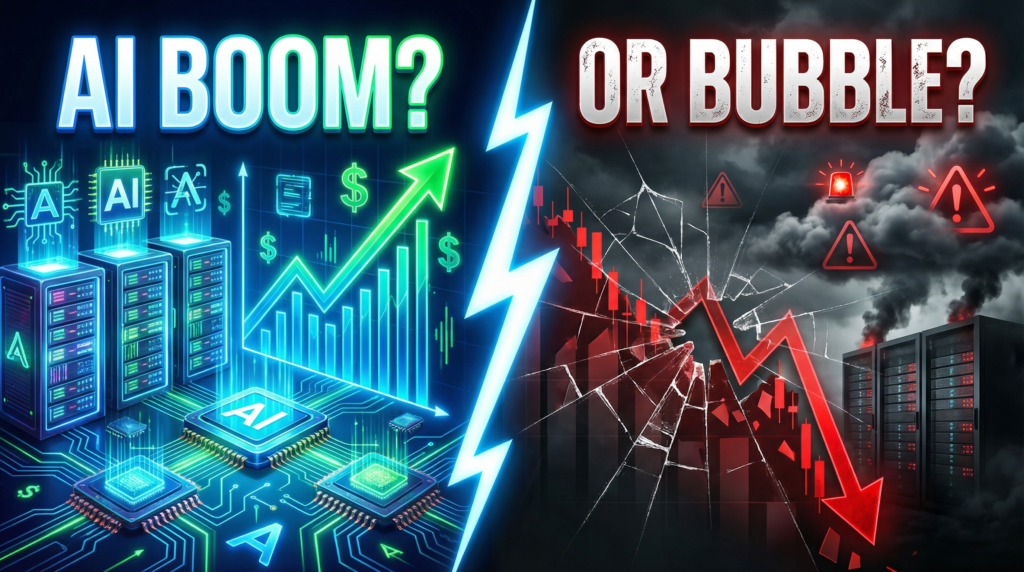
In 2025, the world has witnessed an explosion in artificial intelligence (AI) investments, raising serious concerns among analysts, investors, and tech leaders alike. The big question? Are we witnessing a booming market or a perilous bubble that could burst at any moment? Let’s explore the driving forces behind this worry and what it means for the future of AI and the stock market.
Key Drivers of Concern
Unprecedented Investment Levels
In 2025, tech giants like Microsoft, Google, Meta, Amazon, and Nvidia poured trillions into AI technologies. This unprecedented spending focused on AI infrastructure, including data centers, chips, and advanced models. For instance, estimates suggest that capital expenditures from major players hit between $300 billion and $390 billion for data centers alone. It’s astonishing that AI stocks accounted for nearly 80% of the gains in the S&P 500 this year, with Nvidia even briefly reaching a staggering market value of $5 trillion.
These figures present a double-edged sword, raising alarms about whether the sky-high stock valuations can genuinely reflect sustainable revenues and productivity growth in the long run.
Resource Strain
The intense investment in AI infrastructure has brought significant challenges, especially regarding power and water consumption. A single large AI-focused data center can consume as much electricity as millions of households. Projections indicate that by 2030, U.S. data centers could utilize 4-12% of the nation’s electricity! This surge has notably driven up utility bills and strained local grids, with some areas seeing wholesale electricity costs rise by as much as 267%.
Additionally, data centers need water for cooling, and the water footprint of AI in 2025 is predicted to exceed the global bottled water demand in some estimates. This is a glaring example of how the AI boom could lead to environmental and resource challenges.
Circular Deals and Debt
There’s a growing concern about the sustainability of some business practices within this thriving AI landscape. Critics warn of “house of cards” arrangements around stock swaps and heavy reliance on debt. Estimates suggest that the debt related to AI investments could surpass $1 trillion by 2028. This behavior mirrors the dot-com bubble’s overbuilding of fiber optics during the late 1990s, raising red flags about the long-term viability of these investments.
Signs of Adoption and Counterarguments
Real Growth in Usage
Despite these concerns, many companies are genuinely adopting AI technologies at unprecedented rates. Paid AI subscriptions for enterprises nearly doubled in 2025, increasing from about 22% to 44% of companies, according to reports by Air Street Capital. Prominent AI tools like ChatGPT, Gemini, and Claude gained millions of paying users, and overall enterprise spending hit $37 billion, tripling from the previous year.
The Bull Case
Optimists argue that this isn’t necessarily indicative of a bubble. Some analysts from firms like Goldman Sachs and Wedbush assert that AI technology is already delivering substantial productivity improvements in areas like coding and advertising. Unlike many dot-com companies, leading AI firms appear to have concrete paths to profitability. Should a market correction occur, it could clear excess “froth” while leaving behind a solid technological foundation, much like how the internet survived its tumultuous beginnings.
Voices from Inside Tech
Notably, prominent voices in the tech industry are acknowledging the bubbling concerns. OpenAI’s Sam Altman has recognized the potential formation of a bubble while Google’s Sundar Pichai pointed to “irrationality” in the market, hinting that no tech company would be immune from a possible downturn.
Historical Parallels and Potential Outcomes
The current market dynamics echo the dot-com bubble, where a handful of companies dominated stock valuations—about 30% of the S&P 500 is currently held by leading AI firms. If this bubble bursts, it could lead to sharp declines in stock prices, job losses in overhyped sectors, and broader economic repercussions. However, experts note that it may not trigger a full-blown recession, as the technological advancements being driven by AI tend to have real, lasting implications, unlike businesses like Pets.com during the dot-com era.
The Closing Debate of 2025
As we reach the end of 2025, the debate intensifies around whether this is a transformative innovation or speculative excess. Although markets currently remain high, signs of volatility—such as recent dips in Nvidia stocks—indicate that investors are becoming apprehensive. If revenues manage to align with investment growth in 2026-2027, fears of a “bubble” may diminish. However, if these revenues fail to materialize, the correction could be sharper and significantly impactful.
In this landscape full of excitement and uncertainty, the future of AI investment hangs in the balance. Are we standing at the brink