

We hear about electric cars, renewable energy, and greener cities — but a new wave of innovation is emerging beneath the surface. And it’s not just about using clean energy…
It’s about building technology that is sustainable from the inside out.
One innovation is getting the world’s attention faster than expected:
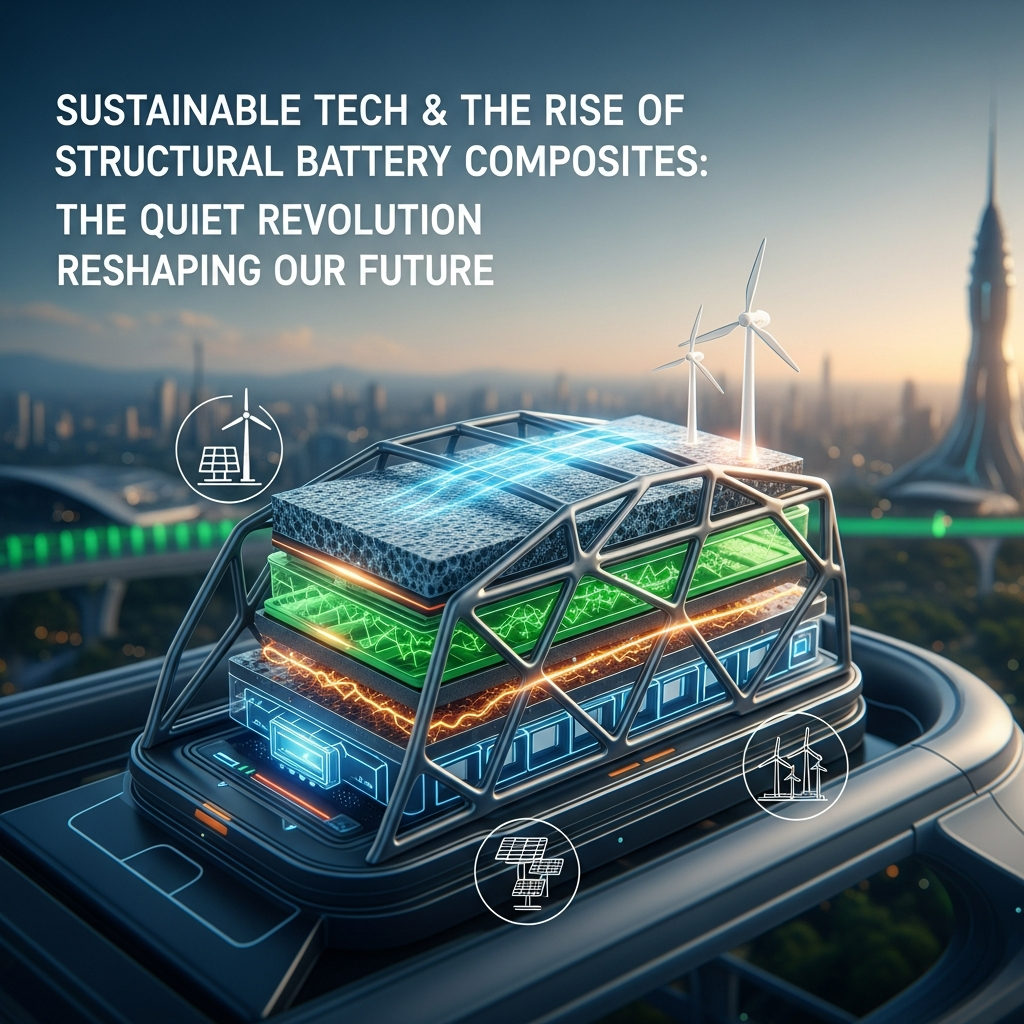
👉 Structural Battery Composites (SBCs) — lightweight materials that act as both structure and battery.
Imagine a future where:
- A car door is the battery.
- Aircraft wings store energy.
- Wearable devices have no battery pack — the fabric itself powers them.
It sounds futuristic — yet it’s already happening.
And that’s why the World Economic Forum named Structural Battery Composites one of the most important emerging technologies for 2025.
Let’s explore what’s driving this shift — and why sustainable tech is becoming the backbone of Industry 5.0.
⚡ Structural Battery Composites: The Game-Changer You Didn’t Expect
Traditional EVs rely on massive battery packs — heavy, expensive, and difficult to recycle.
Structural Battery Composites flip the concept:
✨ The structure becomes the battery.
These materials are:
- Ultra-lightweight
- Strong enough for aerospace
- Capable of storing electrical energy
This could reduce EV weight by up to 50%, meaning:
- Longer range
- Shorter charging time
- Less material waste
It’s not just innovation — it’s efficiency redefined.
🌍 The Bigger Picture: The Sustainable Tech Market Is Exploding
According to Capgemini and GeeksforGeeks, the sustainable tech market is expected to reach $62.4 billion by 2025.
Why so fast?
Because the pressure is coming from all sides:
- 🌱 New regulations
- 🌍 Climate targets
- 💰 Cost-saving innovations
- 🏭 Cleaner manufacturing requirements
Sustainability is no longer a branding feature — it’s business survival.
🏭 Edge Computing, Efficiency & Cleaner Infrastructure
A surprising player in this transition is edge computing.
Instead of sending all data to the cloud — edge devices process information locally.
The result?
- Lower energy use
- Faster performance
- Reduced emissions
- Less hardware strain
Sustainable technology is becoming smarter, smaller, and more efficient — not just cleaner.
🤖 The Buzz: Robotics, Biotech & Human-Machine Synergy
X (formerly Twitter) is full of conversations connecting sustainability with high-tech engineering.
Trends include:
- Robotics investment surging ($4.2B in 2024 alone)
- Biotech turning waste into materials
- AI-powered systems designing sustainable supply chains
This isn’t just the next industrial revolution —
it’s the first human-and-machine collaboration era focused on planetary health.
👀 A New Twist: “Invisible Technology”
Globant’s latest report introduces a captivating phrase:
Invisible Experiences
Technology is becoming so integrated — so seamless — that it fades into the background.
No bulky batteries.
No visible hardware.
No constant charging.
Just:
- Smart fabrics
- Intelligent materials
- Embedded AI
- Environment-friendly components
Axis Communications echoes this vision with “sustainable edge security,” where hardware operates independently, efficiently, and with minimal environmental impact.
🧩 So What Does This Mean for the Future?
The shift is clear:
🚗 Cars won’t hold batteries — they’ll be batteries.
👟 Wearables won’t attach devices — they’ll function as power sources.
🏢 Buildings won’t plug in solar panels — they’ll store their own energy.
And as sustainable tech matures, the line between:
- Artificial and natural
- Digital and human
- Visible and invisible
will continue to blur.
🌱 Final Thought
Sustainable technology isn’t just about “saving the planet.”
It’s about designing a future where:
- Innovation doesn’t drain resources
- Efficiency fuels growth
- Technology supports life — not replaces it
Structural battery composites, invisible experiences, robotics, edge computing, and biotech aren’t isolated trends…
They’re puzzle pieces forming a single vision:
✨ A world where sustainability and technology evolve together — not against each other.