


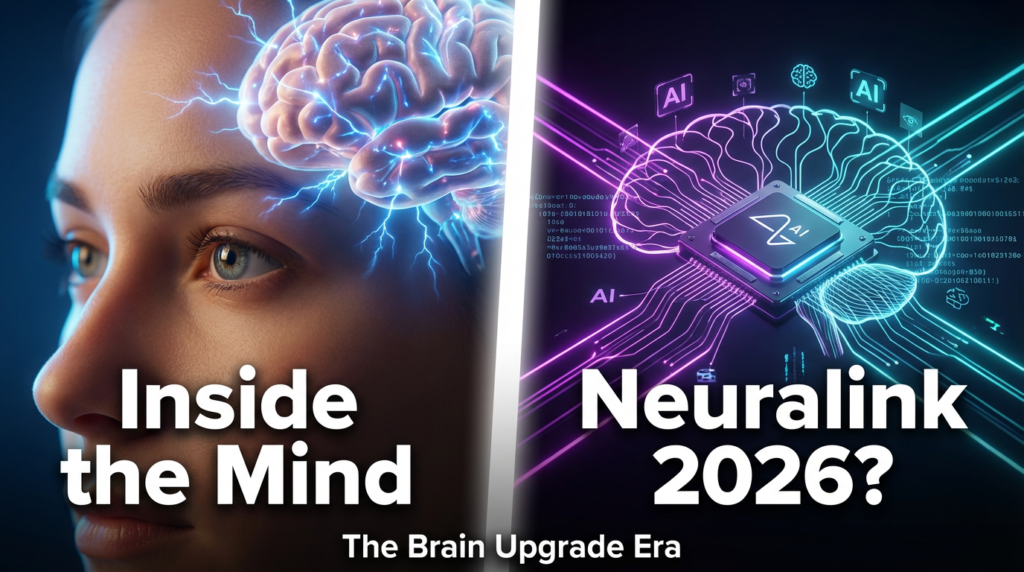
We are standing at the edge of one of the most intimate technological shifts humanity has ever faced—not in our pockets, not on our desks, but inside our minds.
Neuralink’s ambitious goal of mass production by 2026 is more than a corporate milestone. It represents a bold attempt to redefine what it means to be human in the age of artificial intelligence. The promise is powerful and emotional: giving movement back to the paralyzed, restoring communication to those who have lost it, and opening entirely new ways for humans to interact with machines—and with each other.
But with such power comes unprecedented responsibility.
The Promise That Feels Like Science Fiction
At its core, Neuralink aims to create a seamless bridge between the human brain and computers. In medical terms, the potential is extraordinary:
- Helping paralyzed individuals regain control and independence
- Enabling people with neurological disorders to communicate again
- Treating conditions once considered irreversible
Beyond medicine lies an even bigger idea: human-AI symbiosis—a future where our minds can interact with artificial intelligence as naturally as we use language today.
It sounds like science fiction. But it’s moving closer to reality.
From Medical Breakthrough to Mass Adoption: The Hardest Leap
The path from laboratory success to mass-produced technology is long—and unforgiving.
To succeed, Neuralink must solve challenges that push the limits of science and engineering:
- Safety: An implant must work flawlessly inside the brain for years
- Reliability: No failures, no data corruption, no degradation over time
- Bandwidth: Enough data flow to make the interface genuinely useful
- Surgery and recovery: Scalable, affordable, and minimally invasive
This is not just about innovation—it’s about trust.
The Regulatory Maze No One Has Solved Before
Unlike smartphones or wearables, brain-computer interfaces operate in the most sensitive territory imaginable: the human nervous system.
Regulators will demand:
- Extensive long-term safety data
- Clear medical benefits
- Strict controls on data handling and privacy
The challenge becomes even greater if Neuralink moves beyond medical necessity into elective cognitive enhancement. No clear regulatory roadmap exists for that future.
Every step forward will be closely scrutinized.
The Ethical Questions We Can’t Ignore
Perhaps the biggest challenges aren’t technical at all.
Brain-computer interfaces force society to confront difficult questions:
- Who owns neural data?
- Can thoughts ever truly remain private?
- Will cognitive enhancement create new inequalities?
- What happens to identity when technology merges with consciousness?
These are not questions one company—or one country—can answer alone. They demand a global conversation involving scientists, policymakers, ethicists, and the public.
Musk’s Timeline: Pressure as a Catalyst
Elon Musk’s 2026 timeline should be viewed less as a fixed deadline and more as a strategic accelerant.
By setting bold targets, Musk forces:
- Faster innovation
- More research investment
- Wider public debate
Even if mass production doesn’t arrive exactly on schedule, the pursuit itself is already reshaping neuroscience, bioengineering, and ethical frameworks.
A “Third Hemisphere” of Thought?
If Neuralink succeeds, brain-computer interfaces may evolve beyond medical tools into something entirely new—a digital extension of human cognition.
Not a replacement for the brain, but an added layer.
A “third hemisphere” that enhances memory, communication, and creativity.
Whether this future becomes empowering or dangerous depends on how carefully we design and govern it.
Final Thoughts: Technology Demands Wisdom, Not Just Speed
The story of Neuralink is ultimately a story about choice and control.
Who controls our thoughts?
Who controls our data?
Who decides how far enhancement should go?
Success cannot be measured only by implant numbers or processing speed. It must be measured by the wisdom, transparency, and care with which this technology is woven into society.
The intersection of humanity and technology has never been more personal.
And the path we choose now will shape not just innovation—but the very definition of being human for generations to come.