
What if eight-year-olds could understand machine learning before they learn algebra?
What if AI literacy becomes as normal as reading and writing?
India is about to make that a reality.
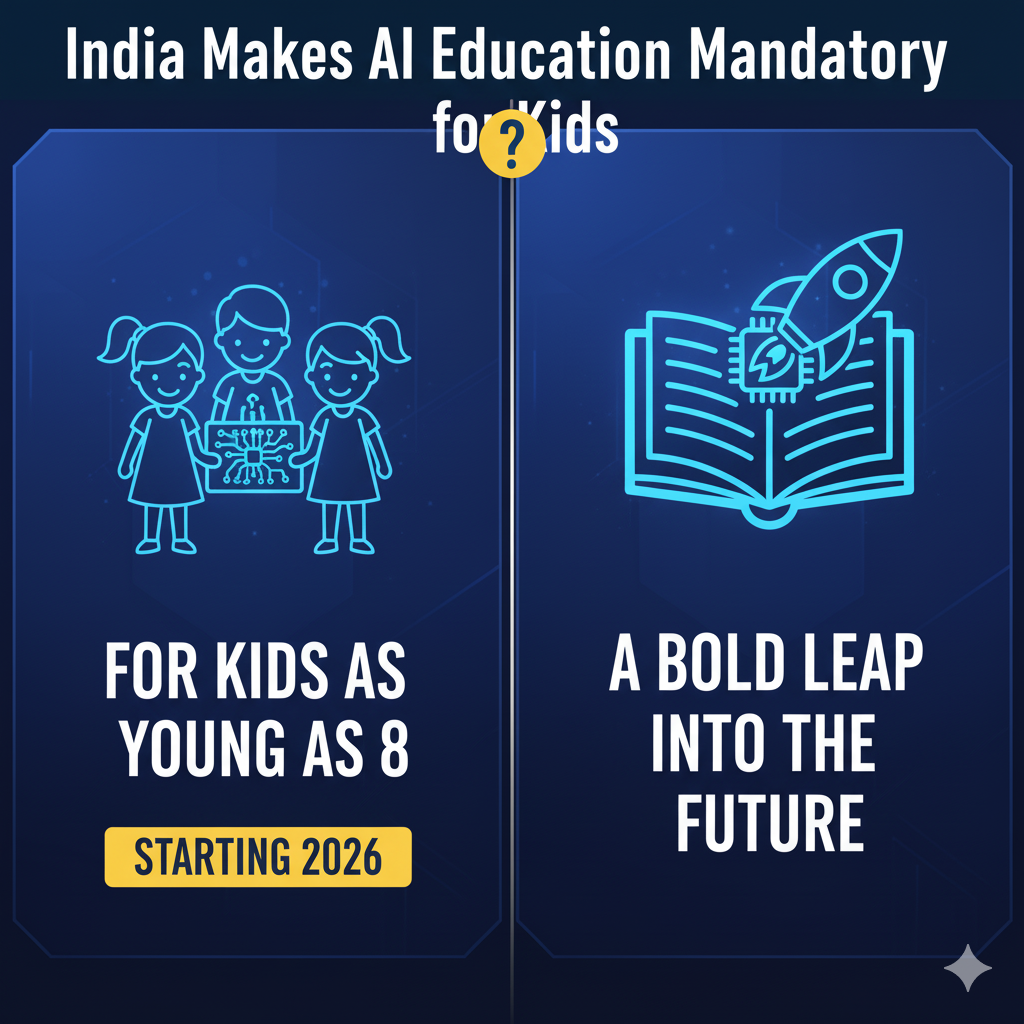
In a landmark move, the Indian government has announced that AI education will be mandatory for children starting at age 8, beginning in 2026. The goal? To build the world’s youngest, largest, and most future-ready AI workforce.
And the internet is buzzing.
Let’s dive into why this decision is shaking up global education — and what it means for the future.
🎒 A New Era of Education: AI for Every Child
From 2026, schools across India will integrate AI learning directly into the curriculum for students aged 8 and up.
This isn’t about advanced algorithms or complex math.
It’s about giving children AI intuition from the start.
Kids will be learning:
- Basics of artificial intelligence
- Coding fundamentals
- Data thinking
- AI safety & ethics
- Simple machine learning concepts
- Responsible use of digital tools
In other words:
A generation that not only uses AI — but understands it.
🤖 Why Is India Taking This Big Leap?
Because the world is moving faster than traditional education can keep up.
AI is no longer optional — it’s everywhere:
- Smartphones
- Healthcare
- Transportation
- Finance
- Content creation
- Jobs of tomorrow
And India wants its youth to lead this transformation, not chase it.
The AI market in India is projected to reach $17 billion by 2027.
The talent gap is real.
And the solution is obvious: start early.
🌍 What Makes This Decision Revolutionary?
Most countries talk about digitizing schools.
India is taking a giant leap ahead by teaching children to understand and build AI.
This program builds:
- Future-ready innovators
- Skilled tech professionals
- Creative problem-solvers
- Ethically grounded digital citizens
It’s not about turning kids into engineers.
It’s about preparing them for a world where AI is woven into everything.
🔥 Why This News Is Trending Everywhere
X (Twitter) exploded the moment the announcement hit.
Educators say:
This could be the biggest curriculum reform in decades.
Tech leaders say:
India is preparing the strongest AI pipeline on planet Earth.
Parents say:
Excited, nervous, curious — and ready to see where this goes.
This decision ties into a global debate:
Should AI literacy be considered a basic skill, like math or language?
India just answered “yes” — loudly.
📘 What Will Kids Actually Learn?
The curriculum is expected to blend fun, creativity, and real-world relevance:
✔ AI in daily life — how tools like ChatGPT work
✔ Gamified coding activities
✔ Simple machine learning models
✔ Ethical thinking: bias, privacy, safety
✔ Critical thinking using AI-powered tools
✔ Hands-on problem-solving projects
Imagine 8-year-olds creating:
- Mini chatbots
- Cute robot projects
- Simple automation scripts
- Digital storytelling tools
This is learning reimagined.
💥 The Bigger Vision: India as a Global AI Powerhouse
This isn’t just an education reform.
It’s a strategic national plan.
By starting AI literacy early, India aims to:
- Lead the world in AI talent
- Attract global tech investment
- Create a skilled young workforce
- Accelerate innovation across industries
The message is clear:
Future industries require future minds — built from childhood.
🧠 Final Thoughts: A Bold Step With Global Impact
India’s decision to teach AI to children as young as 8 isn’t just policy.
It’s a statement.
A statement that:
- The future is AI
- Children deserve access to it
- The next generation must be creators, not just consumers
This move might spark a global shift in education systems.
And years from now, the world may look back at 2026 as the moment everything changed.
India isn’t waiting for the future.
It’s building it — one young mind at a time.