
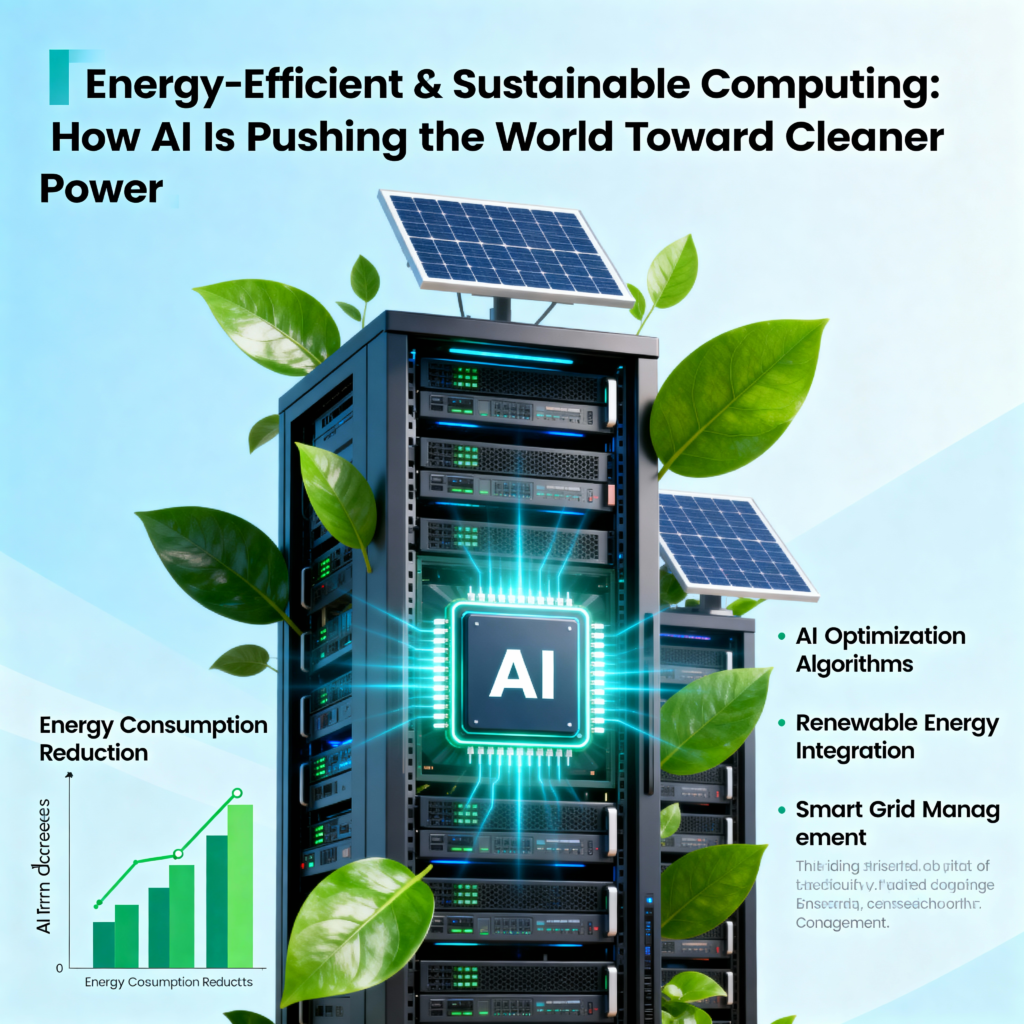
Artificial Intelligence is growing fast — very fast. From chatbots and image generators to self-driving systems and smart factories, AI is everywhere. But behind this digital magic is something very physical: huge data centers that consume massive amounts of electricity.
As AI use explodes, the way we power computers is being completely rethought. Today, energy-efficient and sustainable computing is no longer a “nice extra.” It has become a core requirement, just like speed and performance.
One surprising result of this shift? A renewed global interest in nuclear power, driven partly by AI itself.
Why AI Uses So Much Energy
AI systems don’t run on thin air. They rely on:
- Large data centers
- Powerful chips
- Continuous cooling
- 24/7 computing
Training one advanced AI model can use as much electricity as thousands of homes. And once trained, these models still need constant power to serve users around the world.
Experts warn that by 2030, AI and cloud computing could:
- Double or even triple electricity demand in some regions
- Put heavy pressure on power grids
- Increase carbon emissions if powered poorly
This is why the tech industry is urgently looking for smarter, cleaner solutions.
Sustainability Is Now a Performance Metric
In the past, companies asked:
“How fast is this system?”
Now they ask:
“How fast and how energy-efficient is it?”
Sustainability has become a core performance metric, alongside:
- Speed
- Cost
- Reliability
Companies that ignore energy efficiency risk:
- Higher operating costs
- Public criticism
- Regulatory problems
- Power shortages
This shift is reshaping the future of computing.
Energy-Efficient Chips: Doing More With Less
One of the biggest changes is happening at the chip level.
New energy-efficient chips are designed to:
- Perform AI tasks using less power
- Reduce heat generation
- Improve performance per watt
Instead of just making chips faster, companies are making them smarter and leaner.
These chips help:
- Lower electricity bills
- Reduce cooling needs
- Cut carbon emissions
Energy efficiency is now just as important as raw power.
Hybrid and Ambient Computing
Another trend is hybrid and ambient computing.
This means:
- Not everything runs in one giant data center
- Some processing happens closer to the user (edge computing)
- Devices use environmental energy when possible
For example:
- Sensors powered by light or heat
- Devices that sleep when not needed
- Systems that adjust power use automatically
This approach reduces unnecessary energy waste and makes computing more flexible.
Structural Batteries: Storing Energy Inside Materials
A newer idea gaining attention is structural batteries.
Instead of separate batteries, energy storage becomes part of:
- Buildings
- Vehicles
- Infrastructure
These batteries:
- Reduce weight
- Improve efficiency
- Store energy where it’s needed
For data centers, this could mean:
- Better backup power
- Less reliance on diesel generators
- More stable energy systems
It’s another step toward cleaner and smarter infrastructure.
Why Tech Giants Are Turning to Nuclear Power
One of the biggest stories in sustainable computing is the AI-driven revival of nuclear energy.
Renewable energy like solar and wind is important — but it has limits:
- Sun doesn’t always shine
- Wind doesn’t always blow
- Energy storage is still expensive
AI data centers need constant, reliable power — 24 hours a day.
That’s where nuclear comes in.
Small Modular Reactors (SMRs)
Instead of massive nuclear plants, companies are exploring Small Modular Reactors (SMRs).
These reactors:
- Are smaller and safer
- Can be built faster
- Produce clean, steady energy
- Fit closer to data centers
SMRs are seen as a practical way to:
- Power AI growth
- Reduce carbon emissions
- Avoid fossil fuels
This is why nuclear investment is rising again — not for weapons, but for computing.
Restarting Nuclear Plants for AI
In some regions, older nuclear plants are being:
- Restarted
- Extended
- Upgraded
The reason is simple:
Renewables alone cannot keep up with AI’s power demand.
For tech giants, nuclear offers:
- Long-term energy stability
- Predictable costs
- Low-carbon power at scale
AI growth is turning nuclear into a clean energy solution, not a controversial one.
The Grid Challenge Ahead
Power grids were not designed for:
- Massive data centers
- Sudden AI expansion
- 24/7 digital demand
By 2030, some regions may see:
- Grid overload
- Energy shortages
- Rising electricity prices
This is forcing governments, utilities, and tech companies to work together to:
- Modernize grids
- Invest in clean power
- Plan long-term energy strategies
AI is reshaping not just technology — but infrastructure.
What the Future Looks Like
In the coming years, expect to see:
- Greener AI chips
- Energy-aware software
- Nuclear-powered data centers
- Stronger sustainability rules
- “Green computing” as a business standard
The companies that succeed won’t just build the smartest AI — they’ll build the most responsible AI.
Final Thoughts
AI is changing the world, but it comes with a heavy energy cost. The solution isn’t to slow down innovation — it’s to power it wisely.
Energy-efficient computing, smarter infrastructure, and clean nuclear power are becoming essential to AI’s future.
The message is clear:
The future of computing must be powerful and sustainable.
Speed alone is no longer enough.
The next era belongs to green intelligence.