
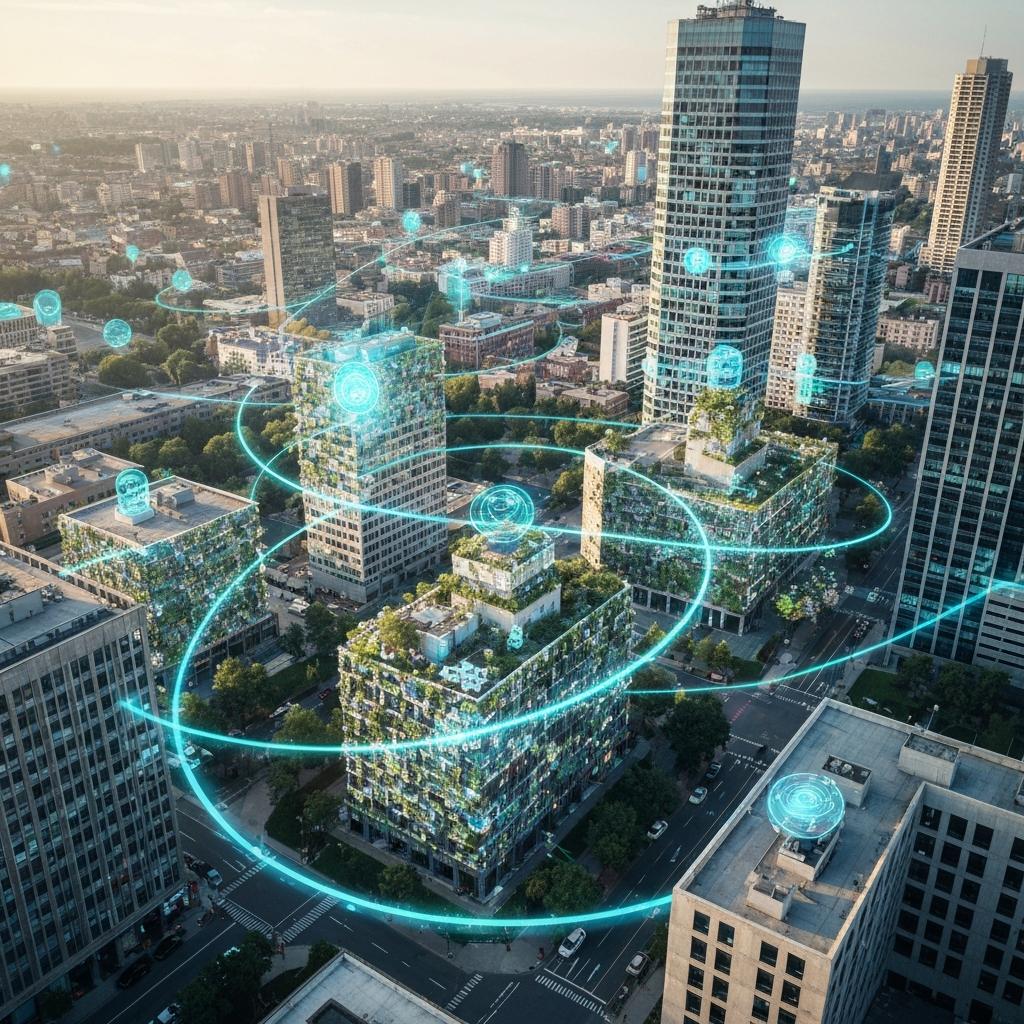
Technology is becoming smarter—but also quieter.
In 2025, one of the most interesting changes in technology is that AI is starting to disappear from our screens and blend into our surroundings. We don’t always see it, tap it, or talk to it directly. Instead, it works quietly in the background, making life smoother and more natural.
This new shift is called Ambient Computing and Spatial Computing—together often described as invisible intelligence.
Let’s understand what this means, why it matters, and how it is changing daily life, using easy and simple words.
What Is Ambient Computing?
Ambient computing means technology that works quietly in the background and responds automatically to people and situations.
Instead of opening apps or pressing buttons, the system:
- Understands context
- Senses your environment
- Acts without needing direct commands
For example:
- Lights that turn on when you enter a room
- Music that adjusts based on your mood
- Temperature that changes automatically
You don’t need to think about the technology—it just works.
What Is Spatial Computing?
Spatial computing connects the digital world with the physical world using technologies like:
- Augmented Reality (AR)
- Virtual Reality (VR)
- Mixed Reality (MR)
It allows digital objects to exist and interact in real physical spaces.
For example:
- Seeing navigation arrows on the road through smart glasses
- Viewing a virtual sofa in your real living room before buying it
- Practicing surgery in a realistic virtual environment
Spatial computing makes digital content feel real and present, not trapped inside a screen.
Invisible Intelligence: Technology You Don’t Notice
The goal of ambient and spatial computing is invisible intelligence.
This means:
- No complicated menus
- No constant notifications
- No heavy interfaces
Instead, AI quietly observes patterns and helps automatically.
In simple words, technology adapts to humans—not the other way around.
How AI Makes This Possible
Artificial intelligence is the brain behind invisible intelligence.
AI systems can:
- Understand voice, gestures, and movement
- Recognize faces, objects, and locations
- Learn daily routines
- Predict needs before users ask
Sensors, cameras, microphones, and smart devices collect information, while AI processes it in real time.
This creates environments that feel smart, responsive, and human-friendly.
Ambient Computing in Daily Life
Smart Homes
Homes are becoming more intelligent and calm.
Examples include:
- Lights that dim automatically at night
- Curtains that open with sunrise
- Appliances that save energy by learning usage habits
All of this happens quietly, without constant control.
Smart Offices
In workplaces, ambient computing:
- Adjusts lighting and temperature for comfort
- Books meeting rooms automatically
- Reduces distractions
This helps people focus better and feel less stressed.
Spatial Computing at Work and Play
Education and Training
Students and professionals can learn through immersive experiences:
- Virtual classrooms
- 3D science models
- Skill training simulations
This improves understanding and memory.
Healthcare
Doctors use spatial computing for:
- Surgery planning
- Medical training
- Visualizing patient data in 3D
This leads to better accuracy and safer treatments.
Shopping and Entertainment
Consumers can:
- Try clothes virtually
- See products in real space
- Enjoy immersive games and movies
Shopping and entertainment become more interactive and personal.
Why This Technology Matters
Ambient and spatial computing offer many benefits:
Less Screen Dependence
- Reduced phone and app usage
- Healthier digital habits
More Natural Interaction
- Voice, gestures, and movement
- Less typing and clicking
Better Productivity
- Faster decisions
- Fewer interruptions
Personalized Experiences
- Technology adapts to individual needs
Challenges and Concerns
Despite its benefits, invisible intelligence raises important questions.
Privacy
These systems collect a lot of data. Strong rules are needed to protect personal information.
Security
Connected environments must be protected from hacking and misuse.
Trust
People need to understand and trust systems that work quietly in the background.
Responsible design and clear governance are essential.
What the Future Looks Like
As we move beyond 2025, ambient and spatial computing will become more common.
We may see:
- Smart cities that adjust traffic and energy automatically
- Wearable devices replacing smartphones
- Workspaces that adapt in real time
Technology will feel less like a tool and more like a natural part of life.
Final Thoughts
Ambient and spatial computing represent a powerful shift in how humans interact with technology.
By blending the digital and physical worlds, and by making AI quieter and more helpful, invisible intelligence is creating experiences that feel smooth, intuitive, and human.
The future of technology isn’t louder or more complex.
It’s calmer, smarter, and almost invisible.