


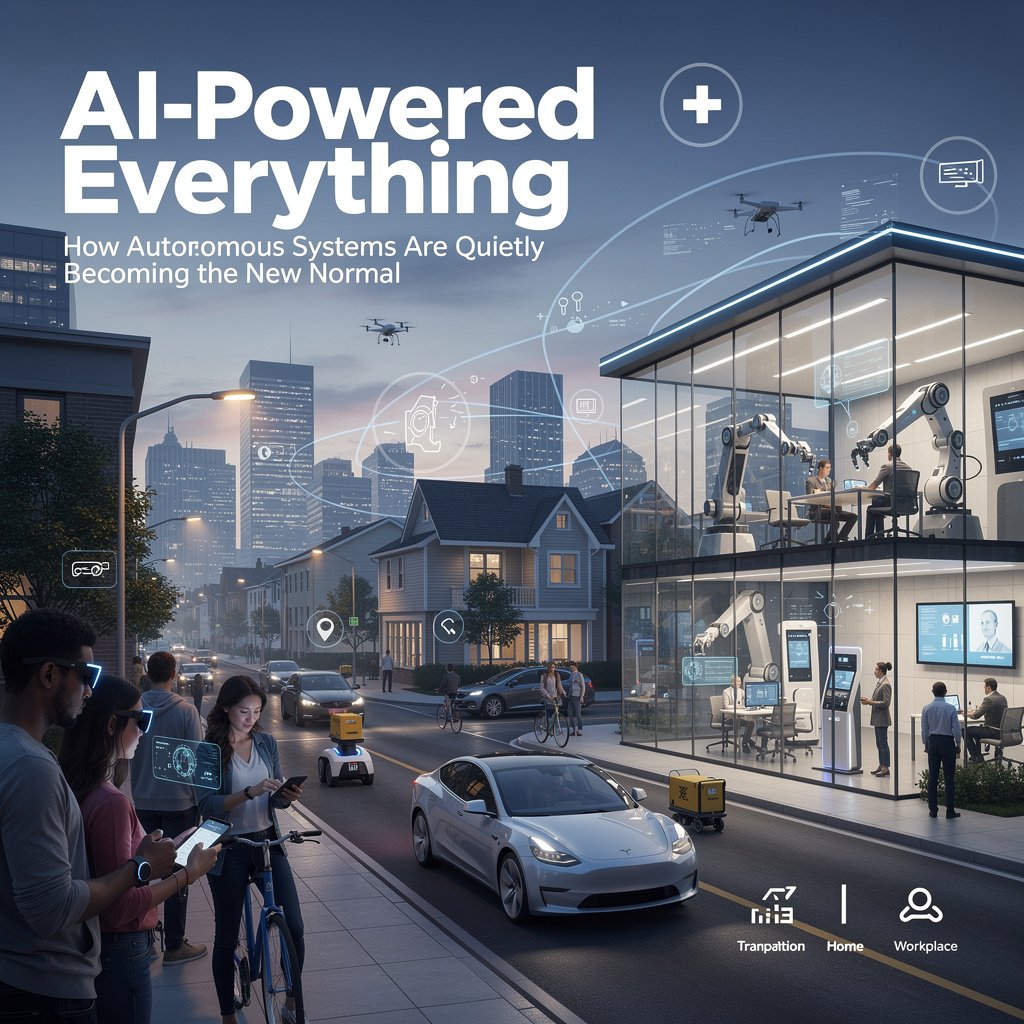
Artificial Intelligence isn’t just a buzzword anymore — it has officially crossed the line between innovation and infrastructure.
Not long ago, AI was treated like a futuristic experiment reserved for tech giants.
But today?
👉 AI is running customer support, approving invoices, predicting fraud, writing content, designing workflows, and even making strategic decisions — often without human intervention.
And it’s only getting started.
As Gartner, McKinsey, and global tech leaders continue to release next-level insights, one message is clear:
We’re entering the era of Agentic AI — intelligent systems that don’t just respond, but take action.
Let’s break down this shift in a way that feels less like a research paper and more like a peek into the future.
🌐 What Exactly Is “Agentic AI” — and Why Is Everyone Talking About It?
Traditional AI answers questions.
Agentic AI executes missions.
It can:
- Plan steps
- Make decisions
- Learn from results
- Interact with systems
- Complete tasks on behalf of humans
Think of it as moving from:
📍 “Give me details about my invoices.”
to
📍 “Review invoices, detect fraud patterns, and process payments automatically.”
This evolution is why enterprises are moving from chatbots → digital coworkers.
And major companies aren’t waiting.
🚀 The Trend: AI Going from Pilot Mode to Full Integration
For years, businesses tested AI quietly — small pilots, limited teams, low-risk use cases.
But 2025 marks a turning point:
- Microsoft launched automated payable workflows in Business Central
- Dell shared APAC data showing widespread rollout readiness
- Companies are now implementing enterprise-wide AI adoption strategies
This shift is being driven by three things:
✔ Lower risk (thanks to better trust frameworks)
✔ Higher ROI
✔ A competitive urgency to not fall behind
AI is no longer optional — it’s becoming the new operating system of business.
🛡 A New Challenge: Misinformation & Trust
With AI systems gaining autonomy, security and truthfulness become mission-critical.
Gartner’s 2025 outlook highlights:
- Continuous Adaptive Trust Models
- AI-native cybersecurity
- Disinformation-detection frameworks
In simple terms?
As AI gets smarter, the systems policing AI must evolve too.
We’ve entered a dual race:
✨ Build more powerful AI
🔐 Make sure it isn’t manipulated, exploited, or misled
📈 The Conversation Online: “AI Is Scaling Faster Than the Internet”
Tech voices on X (formerly Twitter) are saying what many are feeling:
AI isn’t just evolving — it’s accelerating.
The adoption curve already surpassed:
- Mobile apps
- Cloud computing
- The early internet
And posts about:
- AI agents replacing routine corporate processes
- Ethical frameworks
- Enterprise playbooks
are trending daily.
No industry is safe from disruption — and no role will remain untouched.
💡 So What Does This Mean for Businesses and Individuals?
Whether you’re an entrepreneur, corporate leader, or someone just trying to stay ahead — one truth is unavoidable:
📌 The future belongs to those who learn how to work with AI agents, not compete against them.
Soon:
- Your calendar will schedule itself
- Your inbox will triage and respond
- Your reports will write themselves
- Your systems will optimize operations live
The question isn’t “Will AI replace humans?”
It’s:
“Which humans will learn to leverage AI — and which won’t?”
⭐ Final Takeaway
AI is shifting from being a tool — to being a collaborator.
We’re witnessing:
- The rise of autonomous systems
- AI embedded into infrastructures
- Enterprises scaling AI like electricity
The companies investing now will be the leaders of tomorrow — and the individuals learning now will be the ones shaping how AI works, evolves, and integrates into society.
Because the future isn’t built on intelligence alone…
👉 It’s built on adaptive intelligence.
And AI is the engine driving that transformation.