


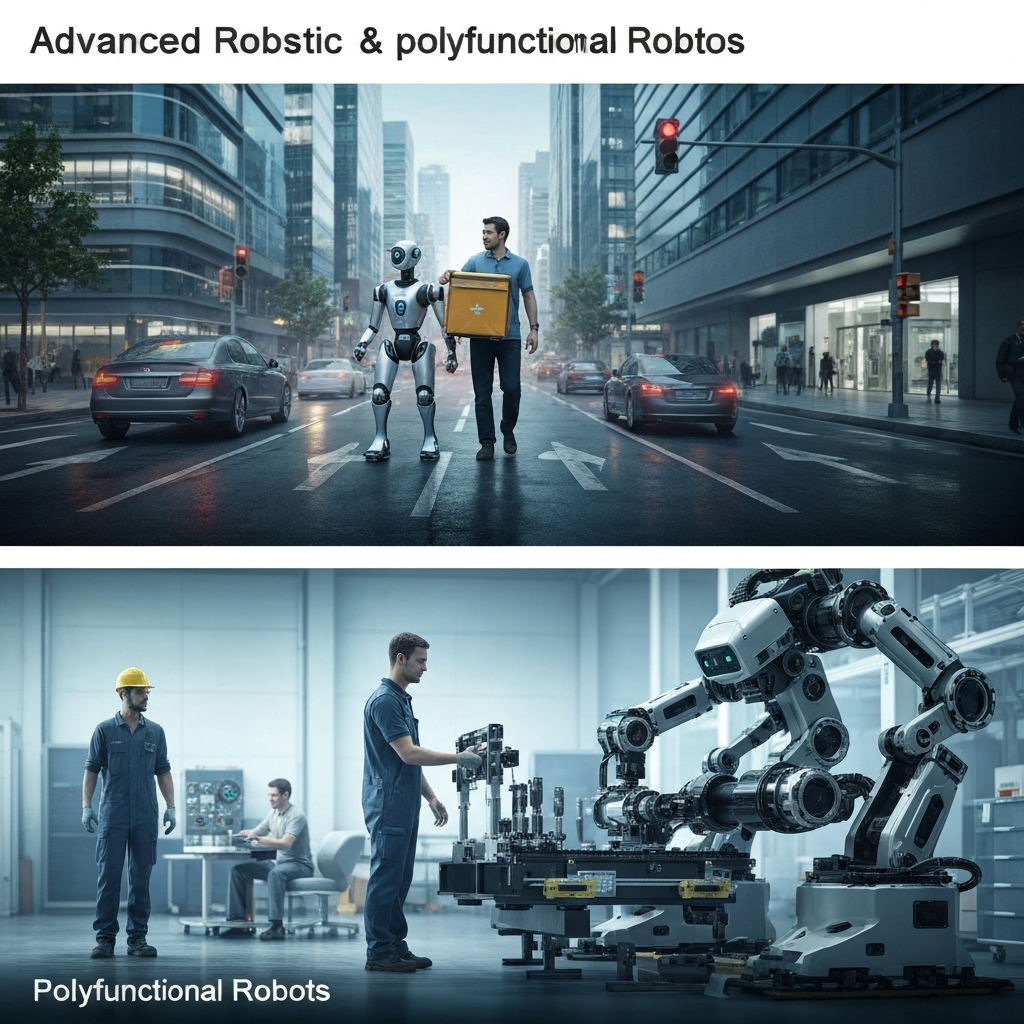
Robots are no longer just machines working behind factory doors. In 2025, robots are becoming smarter, more independent, and more human-like than ever before. Thanks to rapid progress in artificial intelligence (AI), a new generation of robots—called advanced and polyfunctional robots—is emerging.
These robots can think, learn, move, and perform many different tasks, not just one. From factories and hospitals to homes and offices, they are slowly becoming part of everyday life.
Let’s understand what this means, why it matters, and how these robots are shaping the future—using easy words.
What Are Advanced and Polyfunctional Robots?
Traditional robots are usually built to do one specific job. For example, a robot arm that only welds car parts or a machine that only packs boxes.
Advanced robotics refers to robots that:
- Can work with little or no human control
- Use AI to make decisions
- Learn from experience
- Adapt to new situations
Polyfunctional robots are robots that can perform multiple tasks instead of just one.
In simple terms, these robots are not just tools anymore—they are becoming intelligent helpers.
Why AI Is the Brain Behind Modern Robots
The biggest reason robots are improving so fast is AI integration.
AI allows robots to:
- See using cameras and sensors
- Hear and understand speech
- Recognize objects and people
- Plan actions step by step
- Learn from mistakes
Instead of following fixed instructions, AI-powered robots can decide what to do next based on their surroundings.
This makes robots safer, more flexible, and more useful in real-world environments.
Robots in Factories: Smarter and Safer Than Ever
Industrial robots have been around for decades, but today’s robots are very different.
Collaborative Robots (Cobots)
Modern factories now use collaborative robots, or cobots, that work side by side with humans.
These robots:
- Adjust their speed when people are nearby
- Help with lifting heavy objects
- Perform tasks like assembly, inspection, and packaging
Cobots improve productivity while reducing injuries and fatigue for workers.
Flexible Manufacturing
Earlier, factories needed reprogramming for every small change. Now, advanced robots can:
- Switch between tasks quickly
- Learn new workflows
- Handle different products
This makes manufacturing faster and more efficient.
Robots in Healthcare: Helping Doctors and Patients
Healthcare is one of the most exciting areas for advanced robotics.
Medical Assistance
Robots are helping with:
- Surgery assistance
- Patient monitoring
- Medicine delivery in hospitals
Some robots can perform extremely precise movements, helping doctors during complex operations.
Elderly and Patient Care
Humanoid and service robots are now assisting elderly people by:
- Reminding them to take medicine
- Helping them move safely
- Providing companionship
These robots don’t replace human care—but they support caregivers and improve quality of life.
Humanoid Robots: Getting Closer to Human-Like Abilities
One of the most talked-about developments in 2025 is humanoid robots.
These robots:
- Walk on two legs
- Use hands to hold and manipulate objects
- Communicate using speech and facial expressions
Powered by advanced AI, humanoid robots can:
- Follow verbal instructions
- Learn household tasks
- Work in offices, hotels, and stores
While they are still improving, their progress shows how fast robotics is evolving.
Robots at Home: From Cleaning to Assistance
Robots are slowly entering homes in smarter forms.
Today’s home robots can:
- Clean floors
- Monitor home security
- Assist people with disabilities
- Help with simple daily tasks
In the future, polyfunctional home robots may:
- Cook basic meals
- Organize household items
- Provide personal assistance
This could make life easier, especially for busy families and elderly individuals.
Why Polyfunctional Robots Are So Important
Polyfunctional robots offer many benefits:
Higher Efficiency
- One robot can replace several machines
- Saves space and cost
Better Adaptability
- Can handle unexpected situations
- Useful in changing environments
Workforce Support
- Reduce dangerous and repetitive work
- Allow humans to focus on creative and decision-based tasks
Rather than replacing humans, these robots are designed to work with us.
Challenges and Concerns
Despite the excitement, challenges remain:
- High development and maintenance costs
- Safety and reliability issues
- Ethical concerns about job displacement
- Need for clear rules and regulations
Experts stress the importance of responsible development, transparency, and human oversight.
What the Future Looks Like
As AI continues to improve, robots will become:
- More autonomous
- More affordable
- More useful in daily life
In the coming years, we may see robot teams working together, learning from each other, and supporting humans across industries.
Final Thoughts
Advanced robotics and polyfunctional robots are no longer just futuristic ideas—they are becoming real tools that shape how we work, heal, and live.
Powered by AI, these robots are transforming from simple machines into smart partners.
If developed carefully and ethically, they have the potential to make the world safer, more productive, and more supportive for everyone.
The future of robotics isn’t about replacing humans—it’s about helping us do more, better, and safer.