


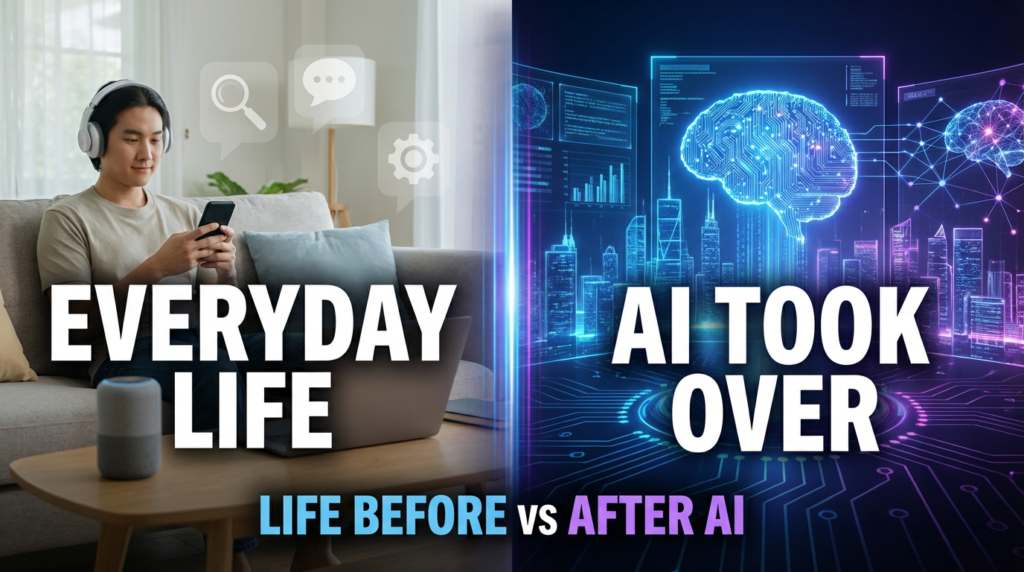
As 2025 comes to an end, one thing is impossible to ignore:
Artificial Intelligence didn’t just grow this year—it settled in.
What once felt like hype, demos, and headlines quietly became part of our daily routines. From how we search the web to how governments think about policy, from new tech billionaires to debates about power-hungry data centers—AI shaped 2025 in ways few expected.
This wasn’t the year AI surprised us.
This was the year AI stayed.
Let’s look back at how 2025 became the turning point when AI moved from “future promise” to everyday reality.
🚀 From Buzzwords to Basics: AI Became Normal
At the start of the year, many people still asked:
“Is AI a bubble?”
By the end of 2025, that question feels outdated.
AI tools are now:
- Embedded in search engines
- Built into phones and apps
- Used daily by students, workers, and creators
- Quietly running behind the scenes in businesses
What changed most wasn’t the technology—it was behavior. People stopped talking about “trying AI” and started depending on it.
AI became less exciting—and that’s exactly why it became powerful.
🔍 Search Was Rewritten—And Google Felt the Pressure
One of the biggest shifts of 2025 happened in a place we all use every day: search.
Search engines stopped being just lists of links. They became answer machines.
Google rolled out major AI-powered updates that:
- Summarize information instantly
- Answer complex questions in natural language
- Reduce the need to click multiple websites
This change forced publishers, creators, and businesses to rethink how they reach people. Search wasn’t just about keywords anymore—it was about context, trust, and usefulness.
For users, it felt magical.
For the internet economy, it felt disruptive.
📱 Apple, Siri, and the Slow AI Awakening
While some companies moved fast, Apple moved carefully—but 2025 showed clear signs of a shift.
Apple teased a much smarter, AI-enhanced Siri, expected to roll out more fully in the coming months. Instead of simple voice commands, Siri is preparing to:
- Understand intent
- Perform multi-step actions
- Act more like a personal assistant than a voice tool
This signaled something important:
Even the most cautious tech giants now accept that AI is unavoidable.
When Apple commits, it means AI is no longer experimental—it’s foundational.
💰 New Billionaires, New Power Centers
AI didn’t just change products—it created fortunes.
In 2025:
- AI startup founders became billionaires
- Chipmakers and cloud companies saw massive gains
- Entire industries formed around models, agents, and infrastructure
But this also raised tough questions:
- Who controls AI power?
- Who benefits most from automation?
- Will wealth concentrate even faster?
AI proved it could create enormous value—but not evenly.
🏗️ The Hidden Cost: AI’s Infrastructure Problem
Behind every “smart” AI tool is something very physical: massive infrastructure.
2025 sparked intense debate about:
- Overbuilding data centers
- Energy consumption
- Water usage for cooling
- Strain on power grids
Some experts warned of AI infrastructure overbuild, where companies race to construct huge facilities faster than demand stabilizes.
Others argued it’s necessary—because the world’s appetite for AI keeps growing.
This year made one thing clear:
AI isn’t just software. It’s a physical, environmental, and political issue.
🏛️ AI and Policy: Governments Finally Paid Attention
For years, governments lagged behind technology. In 2025, that changed.
Across the world:
- New AI regulations were proposed
- Ethical frameworks were debated
- National AI strategies were updated
AI moved from tech pages to policy rooms.
Lawmakers began treating AI like electricity or the internet—a force that needs rules, safeguards, and long-term planning.
The challenge?
Regulating something that evolves faster than laws can be written.
🤖 From Tools to Teammates: How People Use AI Now
Perhaps the biggest transformation of 2025 happened quietly—inside people’s workflows.
AI became:
- A writing assistant
- A coding helper
- A research partner
- A planning and thinking tool
People stopped asking, “What can AI do?”
They started asking, “How can AI help me?”
This shift—from tool to teammate—defines 2025 more than any headline.
🔮 What 2025 Taught Us About the Future
Looking back, 2025 wasn’t about flashy breakthroughs.
It was about integration.
AI:
- Slipped into everyday life
- Changed habits, not just headlines
- Became something people rely on without thinking
The real transformation wasn’t technical—it was human.
✨ Final Thoughts: The Year AI Stopped Being Optional
As the year ends, one truth stands out:
👉 AI is no longer something we talk about. It’s something we live with.
2025 will be remembered as the year AI:
- Left the lab
- Entered homes, offices, and policies
- Became part of the world’s basic operating system
And if this year was about settling in, the next few years will be about reshaping everything.
The AI era didn’t begin in 2025.
But 2025 is when we finally accepted that it’s here to stay.